How authors can autograph their e-books!

Authorgraph, baby, the neatest author aid since the invention of electronic word-processing devices!  Okay, maybe I’ve been half asleep at the switch, but I hadn’t heard of Authorgraph (formerly called Kindlegraph) before.  I was so excited, I rushed out (electronically speaking) and signed up for the free app.

Evan Jacobs, Founder of Authorgraph

Evan Jacobs, Founder of Authorgraph

What is Authorgraph? you might ask, and rightly so, trying to clear yourself of the storm of writerly enthusiasm energizing each keystroke of this article. Authorgraph is an application developed by a fellow named Evan Jacobs of Seattle, WA.  The app originally came out as a service of Amazon’s Kindle e-reading device and was called a Kindlegraph.  Last year, the software was upgraded to be able to work on almost any e-reading device, including Nook and Sony, thus necessitating the name change of the app. Here’s how it works:

First you sign up for your free Authorgraph account. You will also be directed to allow Authorgraph to use the information on your Twitter account, and the URL of your finished Reader Request form will include your Twitter name. Once your new account has been confirmed, you set up your signature by going to the Add A Book to Authorgraph page and inserting your Amazon ASIN number (see below for how to find this number) in the space provided.  That’s it.  Could anything be easier?

You need to do this on an individual book-by-book basis, and each request will be completed through an automatic process, wherein you receive the request via Authorgraph. You then add your note and insert your signature and send the finished Authorgraph to your reader with a picture of the specific book cover.  Below are Authorgraph’s answers to some frequently asked question by authors about the implementation and use of their Authorgraph signature..

1. What is an Authorgraph?

It’s a personal, digital inscription for an e-book. It is sent directly from an author to a reader’s digital reading device.

2. What does an Authorgraph look like?

Here is an example.

3. Is Authorgraph.com affiliated with Amazon?

No, Authorgraph.com is not affiliated with Amazon except that Authorgraph.com earns an affiliate fee for any books purchased from Amazon.com after clicking on one of the Amazon links on Authorgraph.com.

4. What is an ASIN?

ASIN stands for “Amazon Standard Identification Number”. It is 10 characters long and may include both numbers and letters.

5. How do I find the ASIN for my book?

The ASIN for your book is right after ‘dp’ in the URL of your book on Amazon.com.
For example, in the URL http://www.amazon.com/dp/0061977969, the ASIN is 0061977969.

6. Do readers need to own or buy my book in order to receive an Authorgraph?

No, but readers who request your Authorgraph are very likely to be current or future readers.

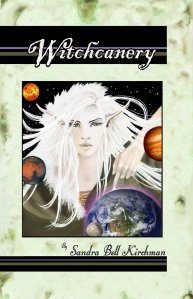
Witchcanery by Sandra Bell Kirchman

Witchcanery by Sandra Bell Kirchman

7. Do readers need to own a Kindle device to receive an Authorgraph?

No, Authorgraphs are viewable on a wide variety of platforms. Readers can simply enter a regular email address at the time of their request and they will receive an email with links to download a PDF version (viewable in applications like iBooks) or an AZW version (viewable in all Kindle apps on iPad, iPhone, PC, Mac, etc.) of their Authorgraph.

8. Is the Authorgraph inserted into the e-book?

No, it is a separate document. This allows a reader to create a “collection” where she can keep all of her Authorgraphs together.

9. Do I need to have a Kindle version of my book to sign up for Authorgraph?

No, any book (even paperbacks and hardcovers) can be Authorgraphed, as your inscription and signature are simply attached to a cover image of the book.

10. Does an Authorgraph use my real signature or does it just print my name in a script font?

One of the most distinctive features of Authorgraph.com is the ability to actually draw your signature. This signing takes place completely in the browser window using a mouse (or your finger if you use a tablet). However, there is also a default option that allows authors to print their name in a script font if they don’t want to use the signing feature.

11. Can Authorgraphs be personalized?

Yes! Every Authorgraph goes only to the specific reader that requested it so an author can write a custom message for each reader. In addition, readers can include a short message to the author in order to provide a bit more context for personalizing the Authorgraph.

12. Is there a cost to send or receive an Authorgraph?

Requesting, sending and receiving Authorgraphs are free! However, if a reader uses Amazon’s Personal Document Service to receive the Authorgraph on his/her Kindle, then Amazon may charge a small delivery fee.

Get a free Authorgraph from Sandra Bell Kirchman

Get a free Authorgraph from Sandra Bell Kirchman

Once you have requested to add your book to the Authorgraph signature system and it has been confirmed, you will receive a widget that will show the Request for Authorgraph of your book to be used by readers. You also have an option to send your Authorgraph to new readers and loyal fans by accessing the Authorgraph Live page.  As I told Evan in my note to him (as suggested by him in order to test it all out), this great aid is the coolest thing to hit authors since the invention of the word-processing machine!

2012 in review

I haven’t been tremendously active on my FantasyFic blog in 2012.  Still I had a few very loyal followers who came and looked whenever I had something new.  I appreciate you so much.  I will be more active this year.

The WordPress.com stats helper monkeys prepared a 2012 annual report for this blog.

Here’s an excerpt:

600 people reached the top of Mt. Everest in 2012. This blog got about 3,100 views in 2012. If every person who reached the top of Mt. Everest viewed this blog, it would have taken 5 years to get that many views.

Click here to see the complete report.

The Power of Pets

Reblogged from Passionate about Pets:

A tale of love and inspiration.
Tessa suddenly went blind and her owners didn't know what to do so they gave her up to a Shelter.

This is her story . . .

After finding out what was wrong with Tessa and receiving the attention and rehab she needed from wonderful, caring people, she is now responding to light and dark, has learned to stand up without falling, and can finally walk.

Read more… 58 more words

Comment from Sandra Bell Kirchman

You might wonder what a true story about a dog is doing in a fantasy fiction site. No, it's not because this is a fantasy and didn't happen. It did. Fact is, I LOVED this story when I read it on fellow blogger Barb Taylor's Passionate About Pets site. It brought home the fact that pet shelters do so much for pets abandoned or mistreated or abused or lost. These shelters truly deserve our full support.

Anyhow, I wanted to reblog this for my weekly column with my hometown's online newspaper. I asked for and received permission from Barb to reblog it, then asked for and received permission from my editor to use it for my March 25th column. I wanted to test it on my blog here, to make it easy for my editor to post it, since he was smart enough to use WordPress to carry his newspaper (EsterhazyOnline.com).

I had no idea it would publish it right away...I thought it would go to draft like a regular post does. Long story short, it did publish right away. I didn't want to be so rude as to delete it, since that act would show up on Barb's site and possibly lead people to believe that I didn't like the story after all. So far from the truth. Anyhow, this is now a special treat for my Fantasyfic readers. Don't blame me...blame the reading treats fairies.

Considering Self-Publishing Your Book?

Because of the changing attitude towards self-publishing (from red-headed stepchild to respectable offspring), this publishing alternative is being considered more often by writers around the world.  Especially with POD book outlets (Print on Demand) such as lulu.com, cafepress.com and amazon.com (to name a few of the better known POD book companies, the cost of producing such a book can be minimal.  I have self-published a few books, with great success.  None of them were POD, but the quality of the printing was outstanding, and all four books are a paper monument to the improved printing techniques of this rising industry.  If you have ever thought about publishing your own book, read some of the following tips offered by longtime publisher Sheryn Hara.

Considering Self-Publishing Your Book?
Longtime Publisher Offers Tips for Making Choices

Published books

Published books

Self-published books have transformed both the reading and writing landscape, with hundreds of thousands of authors now eschewing traditional publishing routes. Once reserved for distribution to a writer’s close family and friends, these books are now respected as an affordable option with every bit as much potential for becoming best-sellers as those produced by the New York houses.

“Countless books published this way have gone on to become best-sellers, from ‘Fifty Shades of Grey’ to ‘Still Alice’ to ‘Rich Dad Poor Dad,’ ’’ says independent publisher Sheryn Hara, founder of the 30-year-old Book Publishers Network (www.bookpublishersnetwork.com) and author of the new how-to, “Self-Publish Successfully.”

“But it’s important to note that these don’t look like they were just spit out of the inkjet printer in your bedroom. You have to have a good product if you want even a shot at success. That means good content that’s well edited; a good cover; good layout; and a good print job. Additionally, you can expect to spend a lot of time and/or money marketing, promoting and getting publicity for your book.”

So, where to begin? First, of course, is getting the book written. But once you’re ready to publish, you can easily be overwhelmed with options: Do a Google search for “independent publishers” and you’ll get nearly 8 million results!

To help sort through the options, Hara offers these tips:

• Decide how you want your book printed. Consider your budget, time frame and individual preferences when evaluating options. They include Print-on-Demand (POD), which involves lower up-front costs and is beneficial if you need only a minimum number of books. However, there are quality issues with POD, and you must pay close attention to your contract, which may assign the copyright to the publisher. Most POD publishers do not provide editing services. Digital printing is another option for small print runs, and comes without many of the pitfalls of POD. Finally, there’s standard printing, which utilizes web-fed or sheet-fed presses. 

• How to choose a printer. Get quotes from at least three printers, and ask for samples of books and papers. Use only a printer whose main job is printing; most of these are located in Minnesota, Wisconsin and Michigan. The most economical size books to print are 5.5 by 8.5 inches; 6 by 9 inches; or 8.5 by 11 inches.

• Covers. People do  judge books by their covers, so make sure yours is fantastic. It’s worth the investment to have it designed professionally. Now you must decide whether you want soft cover, hard cover or both. You may have a choice of gloss lamination or matte. If you go with matte, check to see whether the printer has a scuff-free version; otherwise, books returned from bookstores may look beat up.

• Paper.  For most books, you’re probably safe going with the “house paper” recommended by the printer. If your book has a lot of pictures, you may want to use gloss paper.

• Bindings.  “Perfect bound” is the norm for soft cover books; a layer of adhesive holds the pages and cover together. Most bookstores don’t like “saddle stitch” – staples used in the center of the book, or comb or wire binding, because you can’t print information on the spines. “Layflat binding” is used for computer, music and cookbooks, which often need to lie flat for functionality when in use.

If you plan to work with an independent publisher – a company you’ll pay to shepherd you through all the details, Hara suggests talking to former customers about their experience. Did the company follow through on everything promised in the contract? Did it meet deadlines? Were representatives accessible, especially if there was a problem? Was the customer satisfied with the final product?

“Decide on your budget, and then look at the quality of books produced by publishers you’re considering. Frankly, the better the quality, the more the book will cost,” Hara says.

“Your pocketbook and your goals should help make the decision easier.”

Sheryn Hara - Complies with Hara Publishing terms of use

Sheryn Hara – Complies with Hara Publishing terms of use

About Sheryn Hara

Sheryn Hara is founder and CEO of Book Publishers Network in Seattle, a 30-year-old company whose clients have produced award-winning books. Hara’s new book, “Self-Publish Successfully,” co-written with Paul S. Carr III, covers all aspects of self-publishing, from writing and editing to marketing, including internet and social media marketing.

Are Books Doomed to Extinction?

These days, the question isn’t so much whether to publish or not, as whether to publish electronically.  With the amazing statistics rolling out of Amazon regarding their popular Kindle ebooks (Kindle e-book sales have overtaken Amazon print sales, says book seller), more and more authors are turning to electronic publishing as a solution to so many author problems (cost of self-publishing print books, for one).  This press release caught my attention as it came across my desk this morning, revealing a response to the question many in the publishing industry are asking themselves.

Are Books Doomed to Extinction?
Publishers Must Innovate to Save the Book as We Know It,
Says Best-Selling Author

Photo credit: By indie.ca under Creative Commons Licence – link to page: http://www.flickr.com/photos/indi/ 4259120807/

Michael Levin says he can see the writing on the iPad.

“Unless something changes, books as we know them are doomed, and not simply because people prefer to read on their iPads or Kindles.” says Levin, (www.BusinessGhost.com), a New York Times best-selling author, as well as editor, publisher, co-writer and ghostwriter.

“You’ll see the major publishing houses starting to go away in three to five years,” Levin says. “Their business model is in free fall. Already, we’re seeing books becoming shorter, cheaper, and diminishing in quality. You’ll soon see fewer really good authors bothering to write books, because books are no longer a meaningful source of revenue.”

Levin points to several developments he says foreshadow a sad ending for books:

  • Attention spans are diminishing. Three-fourths of teachers said their students’ attention spans are shorter than ever, according to a poll released in June. By 11 years old, nearly half of the kids had stopped reading for pleasure. The poll, by publisher Pearson UK, is just the most recent survey/study documenting shrinking attention spans and a corresponding drift from books. “Part of the problem is children don’t see their parents reading,” Levin says. “Obviously, the kids’ aren’t the only ones with diminishing attention spans.”
  • Major publishers are producing lower-quality books. The big publishing houses today are more interested in a quality marketing plan than in the quality of the book, so we’re being deluged by low-quality books. One reason is that many large publishers have stopped taking on the expense of marketing books, but they know it’s necessary for sales. So they take on authors with a marketing plan and budget. They’re also less interested in “star” authors, who demand higher royalties. They also lost authors when they eliminated advances in response to the 2008 recession.
  • Books are moving to devices, where content is free and time is thin-sliced. Online, you don’t expect to pay for content. People will expect books available online to be either free or very inexpensive, and if those books turn out to be one chapter of ideas and eleven chapters of Hamburger Helper, they will be less willing to pay for them. Also, people don’t spend much time going into depth online; books are supremely inappropriate for the surface-skimming nature of the Internet. Once people have bought a bunch of ebooks they’ve never started, they’ll stop buying them altogether.
  • Authors have a more difficult time earning a livable wage.Fewer authors can earn enough to make writing a full-time job. The audience is shrinking and fewer people are willing to pay $15 for a paper book when cheap alternatives are available. “We’ve already seen more books written to promote a product, service or company, or to brand the writer so he or she can pursue a more lucrative field,” Levin says. “Most books of the future will be marketing tools, since that’s the only way they’ll be profitable.”

    Photo credit: By Gadjo Cardenas Savilla under Creative Commons Licence – Page link: http://www.flickr.com/photos/gadjo/4121943097/

Levin does find reason for hope, but it will require publishers to change how they do business.

“They need to stop trying to go after the mass market, which doesn’t exist anymore, settle on a niche and develop a brand. Publishers that stand for something in the reader’s mind – like Harlequin stands for romance – are built for the long haul,” he says.

Instead of publishing 500 low-quality books every year, major publishers should bring out only 50 top-quality winners and actually market them, he says. And publish how-to and other guidance and instructional books in concentrated form: short, powerful and to the point,

The rest of us have a job to do, too, Levin adds.

“People need to read, and they need to read to their kids or buy them books. If people stop demanding good books, there eventually will be none available,” he says. “The winners, going forward, will be that minority who still read and think for themselves. It’s a lot easier for government, the military, and the corporate world to control the way people think if they aren’t reading for themselves.  That ought to be reason enough to save the book.”

About Michael Levin

Michael Levin, founder and CEO of BusinessGhost, Inc., has written more than 100 books, including eight national best-sellers; five that have been optioned for film or TV by Steven Soderbergh/Paramount, HBO, Disney, ABC, and others; and one that became “Model Behavior,” an ABC Sunday night Disney movie of the week. He has co-written with Baseball Hall of Famer Dave Winfield, football broadcasting legend Pat Summerall, NBA star Doug Christie and Hollywood publicist Howard Bragman, among others. As a publishing consultant, Michael’s best-selling clients include ZigZiglar, Michael Gerber and Jay Abraham. He was the editor for Ziglar’s most recent book, “Born To Win.”