How authors can autograph their e-books!

Authorgraph, baby, the neatest author aid since the invention of electronic word-processing devices!  Okay, maybe I’ve been half asleep at the switch, but I hadn’t heard of Authorgraph (formerly called Kindlegraph) before.  I was so excited, I rushed out (electronically speaking) and signed up for the free app.

Evan Jacobs, Founder of Authorgraph

Evan Jacobs, Founder of Authorgraph

What is Authorgraph? you might ask, and rightly so, trying to clear yourself of the storm of writerly enthusiasm energizing each keystroke of this article. Authorgraph is an application developed by a fellow named Evan Jacobs of Seattle, WA.  The app originally came out as a service of Amazon’s Kindle e-reading device and was called a Kindlegraph.  Last year, the software was upgraded to be able to work on almost any e-reading device, including Nook and Sony, thus necessitating the name change of the app. Here’s how it works:

First you sign up for your free Authorgraph account. You will also be directed to allow Authorgraph to use the information on your Twitter account, and the URL of your finished Reader Request form will include your Twitter name. Once your new account has been confirmed, you set up your signature by going to the Add A Book to Authorgraph page and inserting your Amazon ASIN number (see below for how to find this number) in the space provided.  That’s it.  Could anything be easier?

You need to do this on an individual book-by-book basis, and each request will be completed through an automatic process, wherein you receive the request via Authorgraph. You then add your note and insert your signature and send the finished Authorgraph to your reader with a picture of the specific book cover.  Below are Authorgraph’s answers to some frequently asked question by authors about the implementation and use of their Authorgraph signature..

1. What is an Authorgraph?

It’s a personal, digital inscription for an e-book. It is sent directly from an author to a reader’s digital reading device.

2. What does an Authorgraph look like?

Here is an example.

3. Is Authorgraph.com affiliated with Amazon?

No, Authorgraph.com is not affiliated with Amazon except that Authorgraph.com earns an affiliate fee for any books purchased from Amazon.com after clicking on one of the Amazon links on Authorgraph.com.

4. What is an ASIN?

ASIN stands for “Amazon Standard Identification Number”. It is 10 characters long and may include both numbers and letters.

5. How do I find the ASIN for my book?

The ASIN for your book is right after ‘dp’ in the URL of your book on Amazon.com.
For example, in the URL http://www.amazon.com/dp/0061977969, the ASIN is 0061977969.

6. Do readers need to own or buy my book in order to receive an Authorgraph?

No, but readers who request your Authorgraph are very likely to be current or future readers.

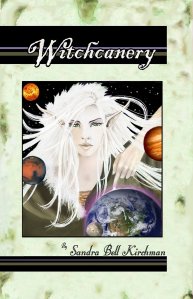
Witchcanery by Sandra Bell Kirchman

Witchcanery by Sandra Bell Kirchman

7. Do readers need to own a Kindle device to receive an Authorgraph?

No, Authorgraphs are viewable on a wide variety of platforms. Readers can simply enter a regular email address at the time of their request and they will receive an email with links to download a PDF version (viewable in applications like iBooks) or an AZW version (viewable in all Kindle apps on iPad, iPhone, PC, Mac, etc.) of their Authorgraph.

8. Is the Authorgraph inserted into the e-book?

No, it is a separate document. This allows a reader to create a “collection” where she can keep all of her Authorgraphs together.

9. Do I need to have a Kindle version of my book to sign up for Authorgraph?

No, any book (even paperbacks and hardcovers) can be Authorgraphed, as your inscription and signature are simply attached to a cover image of the book.

10. Does an Authorgraph use my real signature or does it just print my name in a script font?

One of the most distinctive features of Authorgraph.com is the ability to actually draw your signature. This signing takes place completely in the browser window using a mouse (or your finger if you use a tablet). However, there is also a default option that allows authors to print their name in a script font if they don’t want to use the signing feature.

11. Can Authorgraphs be personalized?

Yes! Every Authorgraph goes only to the specific reader that requested it so an author can write a custom message for each reader. In addition, readers can include a short message to the author in order to provide a bit more context for personalizing the Authorgraph.

12. Is there a cost to send or receive an Authorgraph?

Requesting, sending and receiving Authorgraphs are free! However, if a reader uses Amazon’s Personal Document Service to receive the Authorgraph on his/her Kindle, then Amazon may charge a small delivery fee.

Get a free Authorgraph from Sandra Bell Kirchman

Get a free Authorgraph from Sandra Bell Kirchman

Once you have requested to add your book to the Authorgraph signature system and it has been confirmed, you will receive a widget that will show the Request for Authorgraph of your book to be used by readers. You also have an option to send your Authorgraph to new readers and loyal fans by accessing the Authorgraph Live page.  As I told Evan in my note to him (as suggested by him in order to test it all out), this great aid is the coolest thing to hit authors since the invention of the word-processing machine!

2012 in review

I haven’t been tremendously active on my FantasyFic blog in 2012.  Still I had a few very loyal followers who came and looked whenever I had something new.  I appreciate you so much.  I will be more active this year.

The WordPress.com stats helper monkeys prepared a 2012 annual report for this blog.

Here’s an excerpt:

600 people reached the top of Mt. Everest in 2012. This blog got about 3,100 views in 2012. If every person who reached the top of Mt. Everest viewed this blog, it would have taken 5 years to get that many views.

Click here to see the complete report.

The Power of Pets

Reblogged from Passionate about Pets:

A tale of love and inspiration.
Tessa suddenly went blind and her owners didn't know what to do so they gave her up to a Shelter.

This is her story . . .

After finding out what was wrong with Tessa and receiving the attention and rehab she needed from wonderful, caring people, she is now responding to light and dark, has learned to stand up without falling, and can finally walk.

Read more… 58 more words

Comment from Sandra Bell Kirchman

You might wonder what a true story about a dog is doing in a fantasy fiction site. No, it's not because this is a fantasy and didn't happen. It did. Fact is, I LOVED this story when I read it on fellow blogger Barb Taylor's Passionate About Pets site. It brought home the fact that pet shelters do so much for pets abandoned or mistreated or abused or lost. These shelters truly deserve our full support.

Anyhow, I wanted to reblog this for my weekly column with my hometown's online newspaper. I asked for and received permission from Barb to reblog it, then asked for and received permission from my editor to use it for my March 25th column. I wanted to test it on my blog here, to make it easy for my editor to post it, since he was smart enough to use WordPress to carry his newspaper (EsterhazyOnline.com).

I had no idea it would publish it right away...I thought it would go to draft like a regular post does. Long story short, it did publish right away. I didn't want to be so rude as to delete it, since that act would show up on Barb's site and possibly lead people to believe that I didn't like the story after all. So far from the truth. Anyhow, this is now a special treat for my Fantasyfic readers. Don't blame me...blame the reading treats fairies.

Author Rights and Responsibilities

“Author Rights and Responsibilities” by Rachelle Gardner was originally published on RachelleGardner.com

This article was reblogged from Rachelle Gardner’s blog. I am a big fan of this blog, which is dedicated to providing information for writers and thought that you all would enjoy this particular article. Rachelle is a literary agent with Books and Such Literary Agency based in California. She works at the foot of the Rocky Mountains in Colorado and describes herself as a voracious reader, a mom, a firefighter’s wife, and a huge fan of Starbucks. I wrote Rachelle and asked her if I could reblog the article; she kindly obliged.

bill-of-rightsI believe that as an author, you can expect certain rights when it comes to dealing with agents and publishers. I also believe that rights come with responsibilities. Here are a few that come to mind:

1. You have the right to decide whether or not to seek agency representation, and which type of publishing to pursue.
→You have the responsibility to educate yourself about your options.

2. You have the right to fair and ethical representation from your agent.
→You have the responsibility to make sure you understand the terms of your Agency Agreement.

3. You have the right to good communication from your agent.
→ You have the responsibility to be a good communicator also, not expecting your agent to read your mind or know how you feel unless you tell them.

4. You have the right to know which publishers your work is sent to, and what their responses are.
→ You have the responsibility to trust your agent’s choices in this regard, and to ask questions when you don’t understand or disagree.

5. You have the right to make decisions about your work, with or without the input of your agent.
→ You have the responsibility to discuss those choices with your agent, keeping him/her informed so they can properly represent you.

6. You have the right to be paid in a timely manner.
→ You have the responsibility to understand when your payments are due according to your contract.

7. You have the right to have your questions answered respectfully by your agent and publisher.
→ You have the responsibility to be respectful of your agent’s and publisher’s time, scheduling phone calls when necessary and otherwise allowing them time to respond.

8. You have the right to end your relationship with your agent.
→ You have the responsibility to understand your Agency Agreement and the terms for termination.

9. You have the right to a fair publishing contract that doesn’t unreasonably tie up your rights or keep you from profiting from your ideas or speaking engagements.
→ You have the responsibility to understand all terms of anything you sign.

10. You have the right to see a marketing plan from the publisher, and to follow up making sure the publisher is delivering on their plan.
→ You have the responsibility to augment the publisher’s marketing plan with one of your own.

11. You have a right to a reversion of rights when the book has been declared out of print according to the terms of the contract.
→ You have the responsibility to request reversion of rights from your publisher at the appropriate time (in consultation with your agent).

12. You have the right to communication from your publisher regarding schedules, editorial, cover design, and marketing.
→ You have the responsibility to ask questions when you don’t know what’s going on.

Do you agree with these? What other rights and responsibilities can you think of?

Valentine’s Day Special – 3 tips for writing romance fiction

historical lovers

“But Sir Geoffrey, I am not free to love you.”

 Many years ago, I prided myself on my disdain for romance writing.  I felt it was sensationalist escapism (not recognizing that all genre writing, if not all fiction, is escapism to some degree).  Romance was overly emotional, I reasoned, and therefore not good literature.  I was above that kind of writing, I told myself.  And the worst conclusion I came to?  It was very easy to write romance fiction.

THEN I attended a Romance Writers’ Weekend Workshop in Saskatoon sponsored by Harlequin Romance.  It was a much respected event, with participants like MaryBalogh (bestselling author and queen of Regency romances).  Reading some of the examples that were distributed at the workshop and discovering that there was a real skill in writing love stories, I quickly became disabused of my silly notions about romance writing!

At that workshop, and over the years, I picked up some ideas on what good romance writing requires.  Although I don’t write romance fiction, nearly every story and novel I write, excluding most of my flash fiction, contains romance.  And these tips have helped me write good romance in my stories.

1. Understand the conflict in romance writing.  The key to any piece of good fiction is the conflict, the suspense.  In a good portion of fiction, the suspense is linked to the uncertainty of the outcome.  However, in romance writing, the outcome is a given.  Boy meets girl – yada yada yada– boy gets girl.  Romance writing requires that the two lovebirds live happily ever after.  So the suspense must come from the conflict between the two.  It can come from misunderstanding, wrong thinking, physical impossibilities (they live a zillion miles apart and no money or means to get together; one is royalty and the other is a commoner—they will not be allowed to get together; and so on).  Create an interesting but seemingly insurmountable conflict between the two and the suspense will lie in the reader wondering how the two could possibly get together, certain that pigs will fly before such a thing could happen to this couple.

2. When your characters talk, make the dialogue scrupulously gender-specific.  While this is important in all fiction writing, it is exceptionally necessary in romance writing.  Capture the way a man approaches events and ideas, asks questions.  For instance, men favor the direct approach.  They broach questions that elicit brief answers, with facts, on a yes-or-no basis.  Women, on the other hand, are more detail oriented and often more sympathetic in their questions and responses.  They will also give examples from their own lives to try and explain what they are trying to say.  For practice, listen in on others’ conversations and take notes on how differently men and women speak.

3. Be aware of the different sub-genres of romance writing and decide, before you start, which type of story you are going to tell.  You probably think you don’t know the various kinds of romance stories, but you probably do:  Historical, Contemporary, Regency, Category, Futuristic/Fantasy/Paranormal, Time Travel, Gothic, Romantic Suspense .  Once you decide, make sure that you are very knowledgeable about whatever the driving force is behind the story:


Photo credit: jdurham from morguefile.com

Anne M.Marble has a very comprehensive list, describing each of the subgenres at Writing-World.com.  I suggest you read this list, get familiar with the subgenres, and then decide which one you want to work with.  And one last thing about romance novels…some are with sex and some are without (Regency novels often do not even have a passionate kiss in them).  It depends on what type of romance it is and the audience the writer is writing to.  But with or without,  all romance novels are about love.  If you remember that, you will not stray far from the true path of romance writing.

Have a fun time trying out your romance writing skills.  Who knows?  You might even fall in love with romance!

 ♥♥♥♥  Oh yeah, and HAPPY VALENTINE’S DAY!  ♥♥♥♥

Considering Self-Publishing Your Book?

Because of the changing attitude towards self-publishing (from red-headed stepchild to respectable offspring), this publishing alternative is being considered more often by writers around the world.  Especially with POD book outlets (Print on Demand) such as lulu.com, cafepress.com and amazon.com (to name a few of the better known POD book companies, the cost of producing such a book can be minimal.  I have self-published a few books, with great success.  None of them were POD, but the quality of the printing was outstanding, and all four books are a paper monument to the improved printing techniques of this rising industry.  If you have ever thought about publishing your own book, read some of the following tips offered by longtime publisher Sheryn Hara.

Considering Self-Publishing Your Book?
Longtime Publisher Offers Tips for Making Choices

Published books

Published books

Self-published books have transformed both the reading and writing landscape, with hundreds of thousands of authors now eschewing traditional publishing routes. Once reserved for distribution to a writer’s close family and friends, these books are now respected as an affordable option with every bit as much potential for becoming best-sellers as those produced by the New York houses.

“Countless books published this way have gone on to become best-sellers, from ‘Fifty Shades of Grey’ to ‘Still Alice’ to ‘Rich Dad Poor Dad,’ ’’ says independent publisher Sheryn Hara, founder of the 30-year-old Book Publishers Network (www.bookpublishersnetwork.com) and author of the new how-to, “Self-Publish Successfully.”

“But it’s important to note that these don’t look like they were just spit out of the inkjet printer in your bedroom. You have to have a good product if you want even a shot at success. That means good content that’s well edited; a good cover; good layout; and a good print job. Additionally, you can expect to spend a lot of time and/or money marketing, promoting and getting publicity for your book.”

So, where to begin? First, of course, is getting the book written. But once you’re ready to publish, you can easily be overwhelmed with options: Do a Google search for “independent publishers” and you’ll get nearly 8 million results!

To help sort through the options, Hara offers these tips:

• Decide how you want your book printed. Consider your budget, time frame and individual preferences when evaluating options. They include Print-on-Demand (POD), which involves lower up-front costs and is beneficial if you need only a minimum number of books. However, there are quality issues with POD, and you must pay close attention to your contract, which may assign the copyright to the publisher. Most POD publishers do not provide editing services. Digital printing is another option for small print runs, and comes without many of the pitfalls of POD. Finally, there’s standard printing, which utilizes web-fed or sheet-fed presses. 

• How to choose a printer. Get quotes from at least three printers, and ask for samples of books and papers. Use only a printer whose main job is printing; most of these are located in Minnesota, Wisconsin and Michigan. The most economical size books to print are 5.5 by 8.5 inches; 6 by 9 inches; or 8.5 by 11 inches.

• Covers. People do  judge books by their covers, so make sure yours is fantastic. It’s worth the investment to have it designed professionally. Now you must decide whether you want soft cover, hard cover or both. You may have a choice of gloss lamination or matte. If you go with matte, check to see whether the printer has a scuff-free version; otherwise, books returned from bookstores may look beat up.

• Paper.  For most books, you’re probably safe going with the “house paper” recommended by the printer. If your book has a lot of pictures, you may want to use gloss paper.

• Bindings.  “Perfect bound” is the norm for soft cover books; a layer of adhesive holds the pages and cover together. Most bookstores don’t like “saddle stitch” – staples used in the center of the book, or comb or wire binding, because you can’t print information on the spines. “Layflat binding” is used for computer, music and cookbooks, which often need to lie flat for functionality when in use.

If you plan to work with an independent publisher – a company you’ll pay to shepherd you through all the details, Hara suggests talking to former customers about their experience. Did the company follow through on everything promised in the contract? Did it meet deadlines? Were representatives accessible, especially if there was a problem? Was the customer satisfied with the final product?

“Decide on your budget, and then look at the quality of books produced by publishers you’re considering. Frankly, the better the quality, the more the book will cost,” Hara says.

“Your pocketbook and your goals should help make the decision easier.”

Sheryn Hara - Complies with Hara Publishing terms of use

Sheryn Hara – Complies with Hara Publishing terms of use

About Sheryn Hara

Sheryn Hara is founder and CEO of Book Publishers Network in Seattle, a 30-year-old company whose clients have produced award-winning books. Hara’s new book, “Self-Publish Successfully,” co-written with Paul S. Carr III, covers all aspects of self-publishing, from writing and editing to marketing, including internet and social media marketing.

One Step After Another…

Usually, I don’t like to read stories in the present tense.  And more usually, I don’t like to write them.  I have only written one or two present tense fiction stories in my entire career.  To my surprise, this story demanded it, and only flowed if I wrote in the present.  If you don’t like present tense like I didn’t, try sticking with it.  I found after a while I forgot about what tense it was and just got involved in the story.  Maybe you can tell why it demanded being told in present tense :)

Head down, one step after another.  The snow is deep and the biting wind is icy.  She shrugs into her black coat, out of style for decades, but still in good shape, no patches or tears that I can see.

Every day except Sunday, she walks down the road, head down, one step after the other.  Always at the same time…3pm.  I wonder where she goes and why.  She walks in the rain or in the blazing sun.  Snow and wind can push against her, but she walks.

"Better times" - Morguefile.com/free

“Better times” – Morguefile.com/free

I know she lives in the little wood house across the road and down a block or so.  It is neat, but a little on the shabby side.  The paint is still good, but I would say it is at least five years, maybe more, since it was painted that pale blue that’s almost white, until you see the white trim and then you realize it’s blue.  The matching white picket fence is missing a picket near the corner.  It has been like that ever since I moved in here.  I guess I’m finding it hard to figure out my life, so I concentrate on hers.

I could probably go to her house with a casserole or something, as a neighborly gesture, but I hold back.  I’m not that much of a cook, although Ben used to eat everything I made.  We also ate out a lot.

Here she comes back again, head down, one step after the other.  I can see her face when she comes back from wherever she goes, even with her head down.  She is a frail little thing, maybe 5 ft. tall, and maybe 95 pounds or so.  Her face is pink, but that could be just from the cold weather.  She has a fringe of very curly white hair sticking out from beneath her black hat.  The hat is almost like a Salvation Army bonnet, but it doesn’t tie under the chin and it doesn’t come down over the ears.  It is as out of date as her coat.  It is also in good shape, although a little faded.

It’s like this every day…did I mention except Sunday?  In the winter, spring, and fall, she wears her black coat.  In the summer, she wears a fuzzy white sweater that is newer looking, always spotlessly white.  And she wears white orthopedic shoes, instead of the black galoshes she wears in winter.  In summer she almost looks like a nurse.  Almost.

 One day, I was watching for her as I usually do.  Don’t ask me why?  I’m curious.  It’s not a sin to be curious.  And it’s not like I have a whole lot to do or a whole lot of people to talk to.  I guess Ben has turned me off people.  Being alone is a better choice. 

Anyhow, I’m watching and watching.  By the time it gets to be 3:30pm, I’m getting worried.  By 4pm, I’m really worried.  I phone my dentist’s assistant with whom I have become somewhat friendly. “Tammy, there’s an old lady who lives near me?  She’s pretty late coming back from her walk,” I say.

 “So?” Tammy says. 

“She’s as punctual as clockwork,” I say. 

“Maybe she had a visitor, or a phone call, or she’s not feeling well.  I think you must worry too much, Karen.  I gotta go.  Spongepants needs me.”

She calls her boss “Spongepants.”  I sat and looked at the phone for a moment. 

Then I look at Spitspot.  “She’s late today, Spit.  What should we do?”

The dog cocks his head, looking adorable as usual.  However, I know he isn’t thinking about the old lady.  He is wondering if he can wheedle a treat out of me.

“Not bloody likely, Spit, old boy.  You’re supposed to be on a diet.”

I return to the window.  Did I miss seeing her and she was just a little late today?  I know deep down that I did not miss her.

I can’t stand it anymore.  I run into the kitchen, grab a box of cookies I was saving for the weekend, pull on my jacket and head for the door.

“I won’t be long, Spit,” I tell him.  “Be a good boy.”

He wags his tail at the “good boy” bit and sits down, cocking his head again.  He knows I think he’s adorable when he does that.  It’s his last-ditch effort to charm me into giving him a treat before I go.  He’s my best friend, but I’m on to his little cons.  I smile and carefully lock the door behind me.

I hurry along the street, mentally rehearsing what I will say to her when I knock on the door and she opens it.  My heart is beating a mile a minute and I’m starting to get a headache.  Maybe I should just go home.  I have a feeling that knocking on that door is going to change my comfortable hidey-hole way of living.

I ring the doorbell instead of knocking.  Hey, it sounds politer than knocking.  There is no sound from the house.  I ring again and wait.  Nothing.  Now I’m getting really worried.  Finally, I knock on the door.  It may not be politer but it’s loud and I know it sounds on the other side.  For a few moments, I hear nothing.  I’m just about to give up and turn to go down the three steps to the path.  I hear a faint sound.

Uneasily, I try the door…it’s not locked.  I open it tentatively and poke my head into a small living room.  “Hello?  It’s Karen Dealing, your neighbor from down the street on the other side.”

I hear a faint quavering… “Come in.  I shall be there directly.”

Spitspot - Morguefile.com/free

Spitspot – Morguefile.com/free

I can barely hear what she is saying, but I get the gist of it.  I come in and perch on a straight-backed chair in the living room.  The room is almost a cliché of ancient grand living…old overstuffed furniture in faded gold, worked with some kind of green material, with spotlessly white antimacassars on the back and arms.  Matching cushions, spindly end tables with really valuable Tiffany lamps, sheer glass curtains on the window beneath plush draperies topped with a matching gold valence.  A few plants are scattered in places, but I figure she’s not much of a gardener.  On one of the end tables is a picture of her in younger days with a mischievous grin on her face.  I like the photo.

She enters the room, leaning heavily on a cane.  I’ve never seen her with a cane before.  Her eyes seem somewhat red.

“Hello,” she says.

I stand up and tower over her.  My hefty 5’7” frame seems twice as big as hers.  “Sorry, Mrs….uh…Mrs…”  I trail off.

“Wentworth,” she says, not cracking a smile.

“Thank you, Mrs.Wentworth.  As I said, I’m your neighbor, Karen Dealing, from just down the road, in the blue house.”

She nods and waits politely, not sitting, but smoothing her navy blue self-belted house dress, presumably to make sure there were no creases.

“I noticed you didn’t take your walk today and wondered if something was wrong.”  I shove the box of cookies at her.  “Here, I brought you these.”

She doesn’t take the cookies and I take them back, awkwardly shoving them in my purse.  I don’t know what to do or say.  She just stands there staring at me.  I am afraid I had mortally offended her. I turn to go, stammering an apology.

She says, “Wait!” and I turn back.  A tear creeps down her peach fuzzy cheek.

“Oh, I’m sorry,” I blurt out.  “I didn’t mean to offend you.  It’s just that I live alone too, and I know how awkward life can be when there’s no one there when you need them and…”  I stop because she is shaking her head.

“You didn’t offend me,” she says.  “Au contraire.”  Good thing I  remembered my high school French and knew that meant “on the contrary.”  I waited for more.

She doesn’t say more though.  She walks with difficulty to the entryway closet and takes out her old black coat.  Up close, I can see how shabby it really is.  I can’t believe she has Tiffany lamps worth a fortune and only one really old coat.

“Come with me, Miss Dealing,” she says.

I stand up, with the cookies crumbling in my purse, and follow her out the door.  Once we get on the road, I offer her my arm.  She takes it as if it was the most natural thing in the world.  I have to walk very slowly to keep pace with her.

“By the way,” I say, by way of conversation, “it’s Mrs. Dealing, but please call me Karen.” 

“Oh, my apologies, Karen.  I never see your husband about.”

So she knows where I live.  I try not to sound bitter and I fail.  “We are divorced,” I say.

“I see,” she says and just keeps walking.  We cross the road to the medical clinic and walk down the next long block.  It’s kind of a hike, but I’m not out of breath yet, thank goodness.  I could never respect myself again if a little old woman could outwalk me.

“This is quite a hike,” I tell her.  “Is this where you go every day?”

“Yes,” she says.  “Excellent exercise.”

We turn the corner, and my curiosity climbs as I see we are headed towards the Norwood Care Home.  This town has four or five care homes because of the high senior population…retired farmers and their spouses.  Yet, I know that Mrs. Wentworth is a home dweller, not a care home inmate.  Well, I think I know.

We walk slowly up the sloping path to the entrance and walk in.  Mrs. Wentworth knows exactly where she is going and takes the lead.  I’m looking around at the facility, which I’ve never viewed before.  It’s clean and cheerful, with plants hanging in the windows and groupings of comfortable armchairs in the main lounge.

"Bright and cheerful" - Morguefile.com/free

“Clean and cheerful” – Morguefile.com/free

Mrs. Wentworth leads me down a hall with open doorways revealing rooms occupied by elderly folk.  The rooms are clean and cheerful as well, with bright bedspreads and colorful curtains.  Some of the rooms are empty and some are occupied.  Mrs. Wentworth stops at an empty room.

“This is Emma’s room,” she says softly.

“Ah, Emma,” I say, somewhat bewildered.

“She was the best of my senior friends.  Then she became my only friend.  When George died…”  Mrs. Wentworth stops talking and limps into the room.  I stand respectfully behind her, wondering why I have a sinking feeling.

Mrs. Wentworth sighs.  “When George died, Emma invited me to move from down east to live with her.  She wasn’t sick then.”  Mrs. Wentworth moves all the way into the room and sits on a small armchair in the corner.  Her eyes have a faraway look in them…a sad, faraway look.  Surprisingly, I recognize the look…almost.

“I was so lonely without George.  I am…was a nurse.  I took care of him while he was ill.  He was my life.”  Mrs. Wentworth folds her hands in her lap and looks down at them.  “Emma was one of my nursing teachers with whom I kept in touch.  I respected and liked her, so when she offered her home to me, I accepted.”

Mrs. Wentworth gets up and moves around the room, touching this figurine and that book, lightly, with the tips of her fingers, almost as if she is blessing the items in the room.  Where is Emma? I wonder, although I’m pretty sure I know.

Stopping and looking me straight in the eye, Mrs. Wentworth says, “Emma died at 4am this morning.  I stayed with her until she was fully in the arms of the Lord.”

I nodded somberly.  I could feel the pain like scissors stabbing me in the heart.

“And now I’m alone again,” Mrs. Wentworth whispers.

I’m nodding now, like a nanny goat.

“We’re both alone now,” Mrs. Wentworth says.  How does she know?  I guess the discarded and abandoned recognize their own.

She puts her hand on my shoulder, frail like a little bird perching, fluttering and slightly afraid.  “Mrs. Dealing…Karen…I would like to invite you to come and live with me.  We wouldn’t be alone anymore.”

I stare at her, tears filling my eyes.  I’m not sure why, but it feels good, like a cleansing, like standing out in a gentle rain, after a hot, sticky day..

It doesn’t take me long.  “Yes, Mrs.Wentworth, I think I would like that,” I say.  “Do you like dogs?”

Protected by Copyscape DMCA Copyright Detector